Article
Feb 24, 2026
US Tariff Chaos and What It Means for India
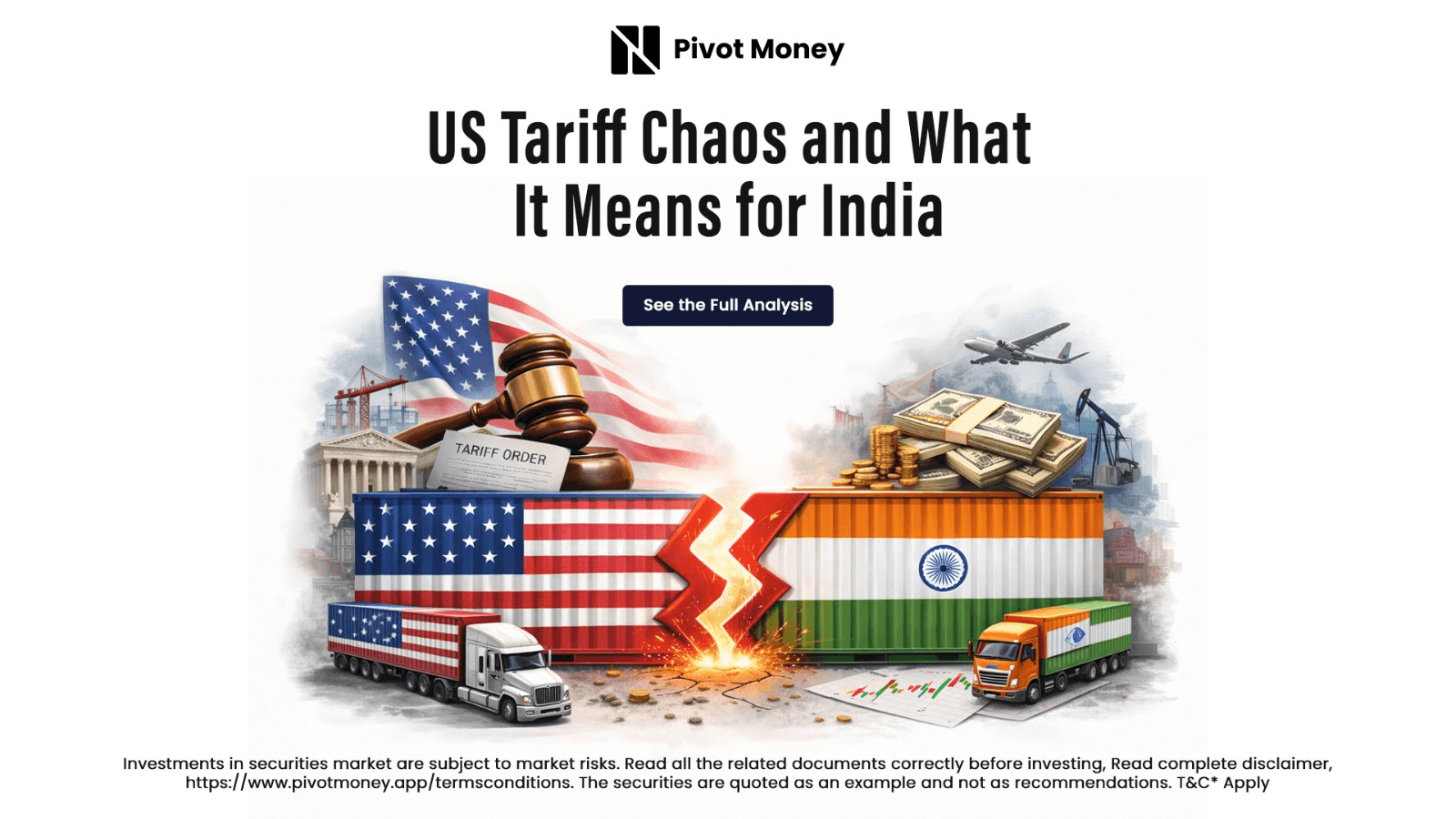
The tariff drama in Washington is back.
Donald Trump is clashing with the Supreme Court of the United States and using alternative legal routes to reimpose tariffs. What seemed like a settled framework is now uncertain again — and that directly impacts the India–US trade deal.
An Indian negotiation team was scheduled to visit Washington. The trip has now been deferred as both sides review the court order. Officially, the deal is alive. Strategically, the balance has shifted.
What Changed?
Trump reimposed tariffs at 10%, later raising them to 15%.
India’s earlier trade understanding involved an 18% tariff structure. After adjustments and concessions, the effective rate now stands closer to 12%.
That is materially better than before.
But the bigger shift is political.
The Court ruling weakens the durability of Trump’s tariff regime. The new tariffs are valid for 150 days. After that, congressional approval is required. That introduces legal risk into US trade policy.
Uncertainty creates leverage.
India’s New Opportunity
India now has space to demand:
Legal certainty
Safety clauses
Protection against future policy reversals
New Delhi does not want to sign a deal that collapses after a US court challenge. Given the volatility, that demand is economically rational.
The Scale of India’s Commitments
This is not a symbolic agreement.
India has reportedly agreed to:
Near 0% tariff access for most US products
$500 billion in purchase commitments over five years
Large imports of US energy, aircraft, metals, and technology
That scale warrants contractual protection. The Supreme Court ruling strengthens India’s case for tighter legal drafting.
Market Signal
NIFTY 50 and BSE Sensex both rose over half a percent.
Markets interpret this as a temporary weakening of US tariff leverage — and therefore a better negotiating position for India.
The Risk Is Not Gone
Trump has warned on Truth Social that countries exploiting the court ruling could face higher tariffs.
The 150-day window is temporary. If Congress backs him, leverage could flip again.
This is no longer just trade policy. It is trade policy shaped by litigation, domestic politics, and election cycles.
What India Must Do Now
Secure enforceable legal safeguards
Lock in predictable tariff ceilings
Avoid irreversible commitments before US clarity emerges
India’s position is stronger today. But trade leverage expires quickly.
The deal is still on.
It is simply entering a phase where law and politics matter as much as economics.
And in global trade, stability is often more valuable than concessions.