Article
Mar 6, 2026
Gift Tax Between India and the US: What NRIs Should Know
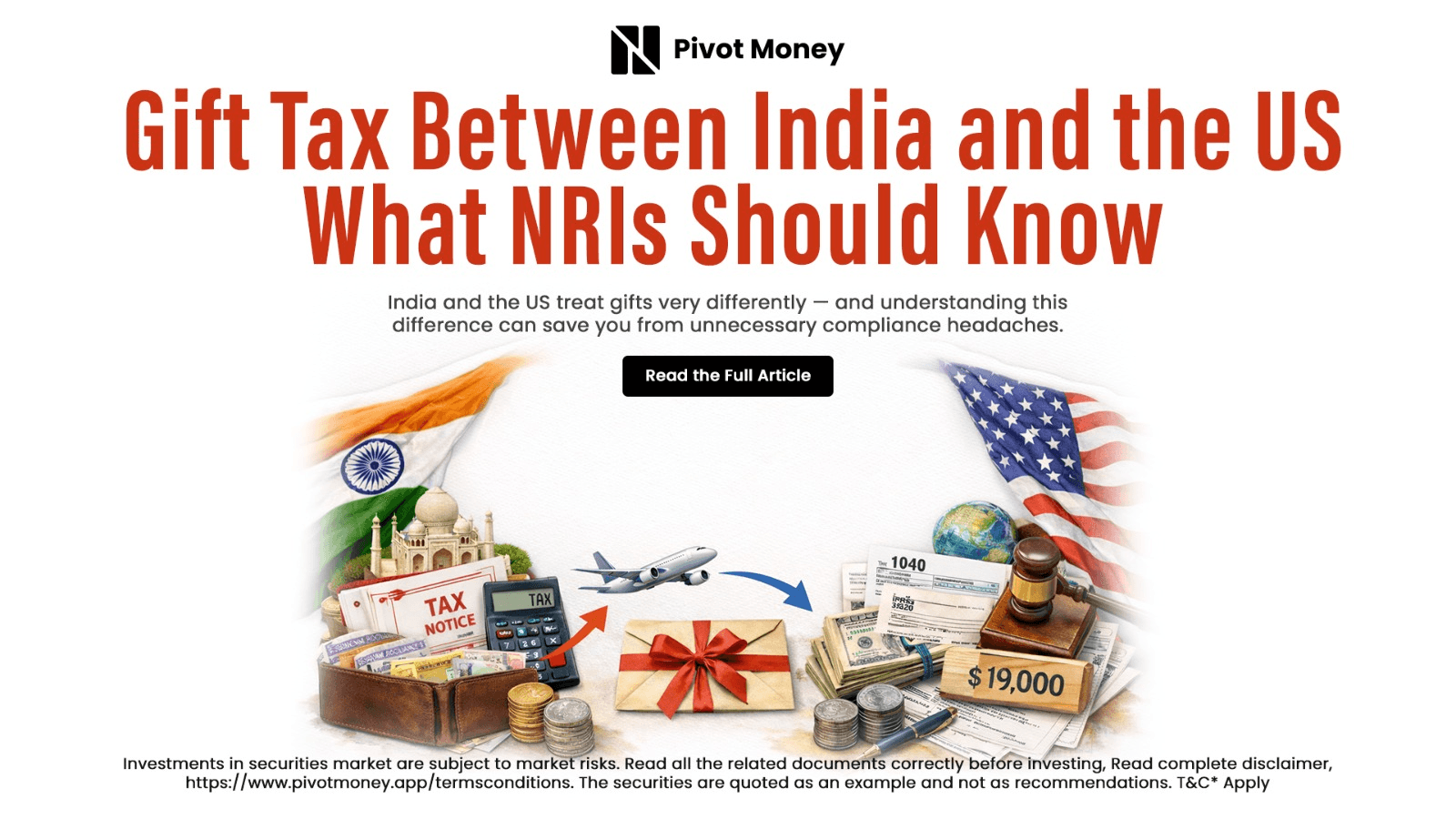
Sending money to family back home seems simple.
But when money crosses borders, tax rules can quietly follow.
India and the US treat gifts very differently — and understanding this difference can save you from unnecessary compliance headaches.
How Gift Tax Works in India
In India, the recipient pays the tax, not the person giving the gift.
If someone receives gifts worth more than ₹50,000 in a financial year, the amount becomes taxable under Income from Other Sources.
However, there are important exceptions.
Gifts from relatives such as parents, children, spouses, siblings, or grandparents are fully tax-exempt regardless of the amount.
This means most family transfers within India happen without any tax liability.
How Gift Tax Works in the US
The US follows a completely different approach.
Here, the donor (the person giving the gift) is responsible for gift tax.
A US person can gift up to $19,000 per person per year (2026 limit) without any tax reporting.
If the amount exceeds this, it must be reported to the IRS, but it may still not trigger actual tax because of the lifetime exemption of about $15 million per individual.
Cross-Border Situations
Things become interesting when gifts move between India and the US.
Example 1: US resident gifting money to parents in India
Parents in India do not pay any tax because gifts from children are exempt under Indian law.
However, the US resident may need to report the gift in the US if it exceeds the annual limit.
Example 2: Indian parents gifting money to a child in the US
There is no tax in India.
But if the US-based child receives more than $100,000 from foreign persons, they must report it to the IRS (Form 3520) for disclosure purposes.
Importantly, this is reporting, not taxation.
The Key Takeaway
Cross-border gifting is common for global families.
But the same transaction can trigger different rules in different countries.
Understanding who is taxed, who reports, and when is essential to avoid compliance surprises.
Because when it comes to international finances,
the smallest transfers can sometimes carry the biggest paperwork.